Park News
Spring Wildflower Pilgrimage
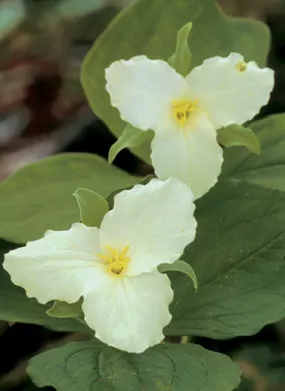 Great Smoky Mountains National Park hosts an annual Spring Wildflower Pilgrimage, and this marks its 76th year. The festival of programs, and guided walks and hikes is scheduled for April 22-25. It’s a little pricey in my estimation, but hey, if you’re crazy about wildflowers, then go for it! The park has over 1,500 kinds of flowering plants, and a list of hikes showcasing the spring blossoms.
On this month in 1776…
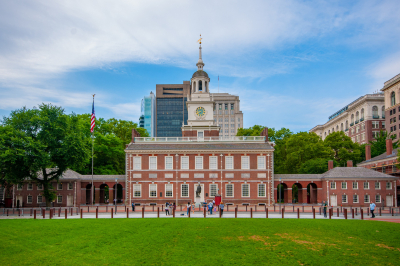
North Carolina directed its delegates to the Continental Congress, meeting in Philadelphia’s State House, now called Independence Hall, part of Independence National Historical Park, to vote for independence.
Park Statistics
The Park Ranking Report for Recreation Visits in 2025 is out. Great Smoky Mountains National Park remains the most visited of all the 63 Park Service sites called national parks, with about 11.5 million visitors last year. However, it ranks third in visits of all 433 sites.
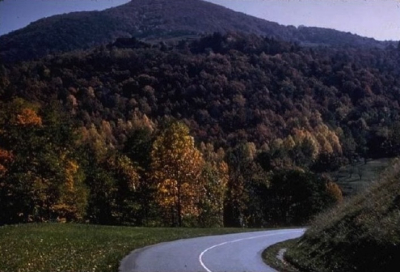 Number 1, moving up a notch from 2024, is the Blue Ridge Parkway, which runs from Shenandoah National Park to Great Smoky Mountains National Park, with just over 16.5 million visitors. Many people are surprised to know this is part of the Park Service. The 469-mile road is sometimes called “America’s favorite drive” and “the museum of the American countryside,” because the 300 miles of trails branching off from it contain traces of some of the oldest pre-historic and early European settlements. Of course, if you get carsick easily, you won’t last long on this curvy motorway. And if you get stuck behind a slow-moving vehicle…well, let’s just say you might bail out and take the interstate instead.
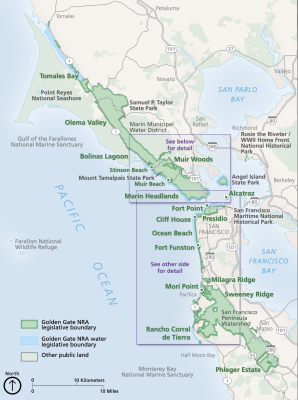
Number 2 on the list of most visited park sites is California’s Golden Gate National Recreation Area, a great place to explore when you’re in San Francisco.
César Chávez
 You may have heard the salacious reports in the news about this leader and co-founder of the United Farm Workers of America union. What you may not know is that his home, also the headquarters of the UFW and where much of his abuse took place, is part of the Park Service’s César E. Chávez National Monument in California. How the revelations will affect the park remain to be seen.
New Books—and one to come!
Pelican Publishing Group is putting out a pair of Christian romantic suspense books this month. A Stalker to Die For by Katy Eeten comes out April 10. Tracy Wainwright’s A Single Shot will release a week later. If Christian historical romance is more your style, Stronger Than the Shifting Sands by Barbara Blythe launches April 24.
And YAY! Remember the excerpt of my book-in-progress Free Indeed I posted in my January blog?. I just signed a contract for Elk Lake, which published my two national park books, to publish this as well! My guess is the book will come out sometime in 2027. Stay tuned!
Passover and Easter
I’ve just been reading again about how Passover, and the Christian holidays of Maundy Thursday (April 2), Good Friday (April 3), and Easter April 5) are inseparably entwined. This year, the two overlap—Passover is April 1-9.
Maundy, or Holy, Thursday is when Jesus and His disciples celebrated what’s called the Last Supper, which was actually Passover (the word Maundy is derived from the Latin mandatum, or commandment, referring to Jesus directing His disciples in John 13:34 to “love one another as I have loved you”).
The first Passover took place as the Israelites were preparing to leave bondage in Egypt (see Exodus 12). Nine plagues on his country hadn’t moved Pharoah to let the Israelites free; the tenth and final one was the worse—the death of every firstborn in the land. God told Moses and Aaron to inform the Israelites how to escape this terrible calamity: take an unblemished, year-old lamb from either the sheep or the goats, kill it at twilight, then put some of its blood on the two doorposts and the lintel of their houses. “[W]hen I see the blood, I will pass over you, and the plague shall not be upon you to destroy you, when I smite the land of Egypt,” God explained (12:13).
The blood was to be applied with a bunch of hyssop (12:22), an aromatic herb in the mint family often used for medicinal purposes. In Scripture, it's prescribed for ritual cleansing, especially for lepers (Leviticus 14:4, 6, 49, 51-52; Numbers 19:6, 18; 1 Kings 4:33; Hebrews 9:19). Leprosy comes from the root word “to strike,” because the disease was seen as a bad “stroke” from God, an indication of His displeasure. Lepers were pariahs, made to live outside their city. A Hebrew priest had to certify a leper was cured of his “stroke” in an elaborate ceremony using hyssop before he or she could be free to join society again (see Leviticus 14).
In the Bible, leprosy is equated with sin; in the Old Testament as a consequence of specific acts of disobedience to God (Numbers 12:9-15, 2 Chronicles 26:19-21), and because it’s a graphic visualization of sin’s ability to destroy not only flesh but also our souls. After David committed adultery with Bathsheba and had her husband killed (2 Samuel 11 and 12), David pleaded with God for forgiveness in Psalm 51: “Wash me thoroughly from mine iniquity, and cleanse me from my sin…Purge me with hyssop, and I shall be clean (v. 2, 7). Isaiah 53 prophesizes Jesus’s death and atonement: “He is brought as a lamb to the slaughter…for the transgression of my people was He stricken [to whom the stroke was due] (v. 7-8).
The New Testament ties all this together in Jesus. John the Baptizer hailed Jesus as “the Lamb of God who takes away the sin of the world!” (John 1:29), alluding to the Passover lamb’s blood that saved the Israelites, and also to Jesus’s shedding His blood on the cross. Side note: Jesus was offered sour wine on a branch of hyssop (John 19:29; not the drugged wine He refused earlier—Matthew 27:34, Mark 15:23).
This sacrifice we commemorate on Good Friday is called “good” because of what Jesus accomplished for us: “Neither by the blood of goats and calves, but by His [Jesus’s] own blood He…obtained eternal redemption for us…For if the blood of bulls and of goats, and the ashes of an heifer sprinkling the unclean sanctify to the purifying of the flesh: How much more shall the blood of Christ, who through the eternal Spirit offered Himself without spot to God, purge your conscience from dead works to serve the living God?...For it is not possible that the blood of bulls and of goats should take away sins” (Hebrews 9:12-14, 10:4).
Lord, now indeed I find
Thy power and Thine alone,
Can change the leper’s spots
And melt the heart of stone.
Jesus paid it all,
All to Him I owe;
Sin had left a crimson stain,
He washed it white as snow.
--Jesus Paid It All